Department of Otolaryngology, Head and Neck Surgery (HNO-Klinik)
Werner Reichardt Centre for Integrative Neuroscience (CIN)
Tübingen
Summary
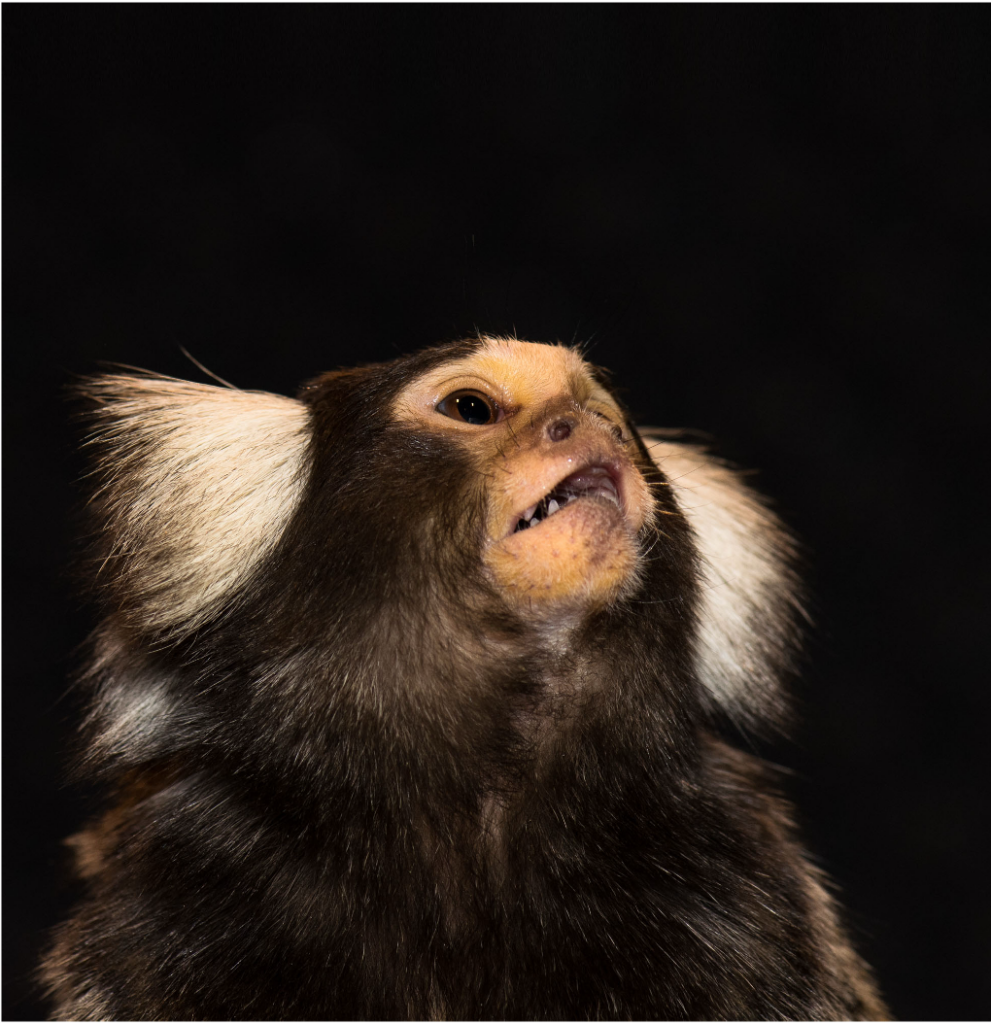
We aim to investigate the neural mechanisms underlying rapid audio-vocal integration in common marmoset monkeys, focusing on their ability to interrupt and modulate vocalizations in response to auditory stimuli.
Recently, we demonstrated that marmosets can rapidly modulate ongoing vocalizations following the onset of auditory perturbations. However, it remains unclear how and at which brain levels the vocal motor network is affected by auditory perturbations, as well as which internal and external factors influence the performance of this behavior. By integrating psychophysical, neuroethological, and neurophysiological approaches, we aim to uncover the roles of cortical and subcortical structures – such as the ventrolateral prefrontal cortex, periaqueductal gray, and ventrolateral pontine brainstem – in rapid audio-vocal integration during marmoset vocal production. A central focus will be on the role of context and timing in shaping the marmosets’ ability to flexibly modulate their vocal output. Specifically, we will examine vocal performance and call structure parameters in a cognitive vocal motor task and during social interactions. We hypothesize that vocal performance is closely linked to cognitive and social factors. Furthermore, we expect to identify the extent to which cortical and subcortical structures contribute to vocal flexibility and how social factors interact with the vocal motor network.
This research will provide critical insights into the neural mechanisms supporting flexible vocal communication. By focusing on marmosets, we aim to identify fundamental principles that may generalize to other vocalizing species, thereby contributing to the broader understanding of the evolution and function of vocal communication within this Research Unit.